According to most veterinary experts, dogs and cats need to eat 2-5% (preferably meat) of their body weight daily depending on their activity level and general climate. Ripley weighs just shy of 100 lbs, is rather active and the climate is cold most of the year... so we're planning on an average of 4% or 4 lbs a day. This equates to about 1 fryer rabbit or broiler chicken (3-5 lbs) a day or 1 chum/dog salmon (8-15 lbs) every 2-3 days. This can be supplemented with tablescraps, slaughter offal, wild game, as well as surplus eggs and dairy... but those are harder to factor into a plan since their amounts vary.
Cats have similar dietary requirements; but considering a cat seldom weighs more than 10 lbs, we can easily lump one cat's feed (4 oz) in with Ripley's calculations. If we have a whole herd of cats, we'll have to refactor for more food. Chicken or rabbit hearts should always be fed to the cat in preference to the dog, since hearts are high in taurine and cats have a greater dietary requirement for it.
Wow! That's a lot of critters to raise or catch.
Salmon & other Finfish: It is illegal to use King salmon as pet food in our district; and Kings don't run our portion of the river. Silver, Pink and Red salmon don't run on the Tanana either. Chum (dog) salmon run July to Mid-August and again in November. The daily bag/possession limit for Sport Fishing both summer and fall chum salmon is 3 per day. The annual bag/possession limit for Subsistence and Personal Use Fishing chum salmon (with permit) in the summer run is 500/year for the summer run and 2,000 for the winter run.
Grayling and Sheefish run the river and creeks June through September; while lower consistent populations of Northern Pike and Burbot can be found year-round. Sport bag limits are low for these species and gear is restricted. There are no bag limits for Subsistence and Personal use unless noted on your permit; however, populations in the creeks are not very high, so you aren't likely to get a huge take even though you are allowed to use gill nets.
Regardless, with the ability to use gill nets and fish wheels with a Subsistence or Personal Use permit, harvesting enough fish to feed Ripley should not be overly difficult or time-consuming as long as we have the means to preserve the take.
Rabbits: A non-commercial breeding doe averages 8 kits per litter every 10 weeks with conservative breeding practices (4 weeks for gestation & 6 weeks for weaning). In our extreme climate, we don't feel that breeding during the winter months is wise for the health of the mother or the kits; so at least 2 breeding cycles are forfeit, most likely 3.
It's generally light enough by March for a rabbit to breed, and warm enough by April to kindle in an unheated barn without supplemental lighting. Light and temperatures begin to plummet after mid-September, so the last litter we can responsibly raise should be kindled no later than October 1st, in order to grow out (12 weeks) before the truly bitter cold sets in.
Breed the doe March 1st, the first litter will kindle April 1st and be grown out by July 1st.
Breed the doe May 15th, the second litter will kindle June 15th and be grown out by Sept 15th.
Breed the doe Aug 1, the third litter will kindle Sept 1st and be grown out by Dec 1st.
There isn't enough time before freeze-up to breed the doe again and raise another litter.
We could tighten the schedule by weaning and rebreeding at 4 weeks instead of 6 and slaughtering at 8 weeks instead of 12. That schedule places a lot of stress on the doe during the breeding period, and requires intense feeding for rapid weight gain of the kits which we don't feel is reasonable or responsible for homestead production.
Three litters will average 20 kits (conservative loss estimate of 20%); which means we'd need to breed 18 does (and 3-4 bucks) on this schedule each summer just to feed Ripley if rabbits were her only food source.
Rabbits have a feed conversion rate of 4:1 (4 lbs of feed = 1 lb of growth). You should budget 150-200 lbs of feed for a doe and her litter (for each litter from conception to slaughter); and budget 1/2 lb of feed per day for open (unbred) does and bucks. For us 54 litters, 4 bucks for 12 months, and 18 does for 3 month comes out to 9,640-12, 340 lbs of feed a year.
Chickens: Given the sheer amount of birds required, it may be wise to consider breeds that mature quicly, and to plan on purchasing broiler chicks every summer rather than attempting to hatch and brood our own flock naturally. Because we don't intend to keep the broilers over the winter like we would our laying hens, it is less important that they be cold-hardy and robust breeds; however, we do intend to house them in portable tractors on pasture, so they can't have any serious health or vitality issues.
Cornish-Rock hybrids are genetically programmed for rapid growth (particularly breast meat), and can reach slaughter weight in 6-8 weeks. However, I have some serious ethical issues raising a non-viable animal that could not survive reliably on its own... and Cornish-Rock, or Cornish-Cross, are notorious for heart, lung and bone/leg disorders due to such rapid growth. These birds are approaching geriatric at 8 weeks and need to be slaughtered before succumbing to health issues... the only reason their meat could be considered "succulent" is because they can't really move around very well.
Brahma, Jersey Giants, and Langshans were considered "Meat Birds" before Cornish-Rocks came along; but they are even slower to mature (12-14 weeks) than many other Dual Purpose/Heritage breeds.Orpingtons were also considered "Meat Birds" and they are reasonably fast to mature, normally reaching slaughter weight in 10-12 weeks. And really -- what's waiting one more month when the birds will be happy and healthy?!
So, perhaps I should be looking for heavy Dual Purpose/Heritage breeds that are considered "fairly fast maturing" - like Australorps, Chanteclers, Delawares, Dominiques, Faverolles, New Hampshire or Rhode Island Reds, Orpingtons, Plymouth Rocks, Sussex and Wyandottes. All these breeds are considered cold-hardy, and most are also winter layers (except Australorps)... just in case we want to keep some for the laying flock or eventually consider a flock large enough for natural brooding. Really, the only breed I'm interested in for layers that is missing from the "early maturing" list are the Buckeyes.
Since we'll be purchasing chicks and brooding them ourselves, we certainly want to wait until it warms up a bit because we most definitely don't have room for 400 chicks in our cabin!! It would probably be better to raise these guys in batches to help spread things out a bit. I think it's safe to assume the chicks will need some supplemental heat for 6-8 weeks until they're fully feathered before leaving them outside in a tractor, and it's really not warm enough (overnight above 40F) to do that until mid-May. Again, we aren't overwintering these birds in an insulated coop, so the last batch needs to be fully feathered and out on pasture before it gets consistently below freezing at night (around Halloween).
We can brood in 3 stages: (1) three weeks in a brooder indoors when they're really fluffy and tiny, (2) three weeks in a larger pen on the enclosed porch with constant supplemental heat, and (3) three weeks in an even larger covered pen with supplemental heat only at night. And then (4) three weeks out on pasture in a tractor until (5) slaughter time.
Raising the broilers in continual batches allows us to have less dedicated equipment because each batch can be moved into the next stage when the previous batch moves on.... it also means we don't have to kill and slaughter 400 birds all at once, which is emotionally draining as well as physically exhausting. Spreading out the harvest also allows us to spread out the preservation of all the meat; much of which will need to be canned since we have limited freezer space.
Batch 1: (1) March 15, (2) April 5, (3) April 26, (4) May 17, (5) June 7
Batch 2: (1) April 5, (2) April 26, (3) May 17, (4) June 7, (5) June 28.
Batch 3: (1) April 26, (2) May 17, (3) June 7, (4) June 28, (5) July 19.
Batch 4: (1) May 17, (2) June 7, (3) June 28, (4) July 19, (5) Aug 9.
Batch 5: (1) June 7, (2) June 28, (3) July 19, (4) Aug 9 , (5) Aug 30.
Batch 6: (1) June 28, (2) July 19, (3) Aug 9, (4) Aug 30 , (5) Sept 20.
Batch 7: (1) July 19, (2) Aug 9, (3) Aug 30, (4) Sept 20, (5) Oct 11.
Batch 8: (1) Aug 9, (2) Aug 30, (3) Sept 20, (4) Oct 11, (5) Nov 1.
So it looks like we've got enough time to do 8 batches of 50 chicks, with a conservative loss estimate of 10%, to feed Ripley for a year if all she eats is chicken (with a bit left over for us too!).
Chickens have a feed conversion rate of 2-3:1 (2-3 lbs of feed for every lb of growth). You should budget 10 lbs of feed for each broiler chick. Each batch of 50 broilers will need 12.5 lbs of starter feed, 287.5 lbs of grower feed, and 300 lbs of finishing feed. So, for our 400 broilers, we're looking at 4,000 lbs of feed plus the cost of the chicks.
Showing posts with label Food. Show all posts
Showing posts with label Food. Show all posts
Wednesday, April 24, 2013


Tuesday, March 12, 2013
The Problem(s) with Can Rotators
I'm always looking for pantry solutions to maximize my canned food storage and make it easier to use. Keep in mind that I have U-shaped shelves with enclosed ends in my walk-in pantry, so I can't do the more common style of storage shelves where you load on one (high) side, the cans roll down (perpendicular to the wall) and unload from the other (low) end. My solution has to work back to front (parallel to the wall).
So, this winter I played around with two different styles of can organizers: an angled shelf, and a can rotator. Eventually, I want to make custom "cassettes" for each of the foods that I regularly stock so that they fit my particular can and shelf sizes, similar to "suitcase" boxes you get canned fruit & veg cases in from bulk stores (that are always the WRONG size for MY shelves!!). I wanted to fiddle with the two units to see which functionality I preferred, so I got (or made) a few different kinds in each of the two designs.
Surprisingly, I actually found that I didn't like the can rotators as much as I thought I would.
Firstly, you get less cans for the space with the rotators because the reverse angles eat up at least 1.5" for each turn with average soup and veg cans. You need to add at least 4" of height to get the same number of cans. This might not make much difference if you have tons of space, but when every inch counts, it gets to be a real problem. In my opinion, the auto-fed rotation functionality doesn't justify losing up to 25% of my precious shelf space... I have more time than space!
The following is an illustration of this, using a 3" diameter x 4" tall can in a cubic foot of space (remember that you need at least 1" drop every 12" to make a can roll):
Secondly, unless you have an even number of shelves in the rotator, you STILL have to load them from the BACK. You can see this on the above illustration. Pretty much reduces the cool factor of auto-fed rotation to moderately tepid.
Thirdly, unless the chutes are curved (which reduces the number of cans by at least 1 for each curve) or you put angled blocks at the bottom of every turn, the stupid %#$%! cans drop weird and get jammed up. This is especially true if any of the cans are dented even the slightest bit.
Fourthly, these don't work at all for funky shaped cans that won't roll. So no hams, no SPAM, no sardines, no corned beef....
Conversely, I found there were really only two true drawbacks to plain angled shelves:
Because the shelf must be angled, in order to get the same number of cans you do need to increase the height, BUT only as much as the back angle (1" up for 12" out)... not the full diameter of the can!
You always have to load from the back, which would be a PITA if you have to take everything out first one-by-one, but not as much of a hardship if everything is in "cassette". The cans still roll from back to front, you just have to work out a system for using up a vertical column because it doesn't autofeed the whole lot to the bottom slot.
There are two major benefits to the angled shelves though:
You can still use them with a can placed upright (slide on their bottom instead of rolling on the side) which also allows you to use them with jars, boxes or odd-shaped cans.
When you have extra deep shelves, you can make a single column cassette and put something different in each row (or just make individual staking modules) which lets you utilize the full depth without stuff getting lost the back.
So, it looks like I'll be designing and fabricating my cassettes to be angled shelves loadable from the rear. I made a rotator out of heavy cardboard and that held up fairly well, but I think I'll need something sturdier if I'm going to be pulling these off the shelf a couple times a year... maybe hardboard or acrylic.
I'll post my results and plans when I finally get to that project ROFL!!
So, this winter I played around with two different styles of can organizers: an angled shelf, and a can rotator. Eventually, I want to make custom "cassettes" for each of the foods that I regularly stock so that they fit my particular can and shelf sizes, similar to "suitcase" boxes you get canned fruit & veg cases in from bulk stores (that are always the WRONG size for MY shelves!!). I wanted to fiddle with the two units to see which functionality I preferred, so I got (or made) a few different kinds in each of the two designs.
Surprisingly, I actually found that I didn't like the can rotators as much as I thought I would.
Firstly, you get less cans for the space with the rotators because the reverse angles eat up at least 1.5" for each turn with average soup and veg cans. You need to add at least 4" of height to get the same number of cans. This might not make much difference if you have tons of space, but when every inch counts, it gets to be a real problem. In my opinion, the auto-fed rotation functionality doesn't justify losing up to 25% of my precious shelf space... I have more time than space!
The following is an illustration of this, using a 3" diameter x 4" tall can in a cubic foot of space (remember that you need at least 1" drop every 12" to make a can roll):
 |
Thirdly, unless the chutes are curved (which reduces the number of cans by at least 1 for each curve) or you put angled blocks at the bottom of every turn, the stupid %#$%! cans drop weird and get jammed up. This is especially true if any of the cans are dented even the slightest bit.
Fourthly, these don't work at all for funky shaped cans that won't roll. So no hams, no SPAM, no sardines, no corned beef....
Conversely, I found there were really only two true drawbacks to plain angled shelves:
Because the shelf must be angled, in order to get the same number of cans you do need to increase the height, BUT only as much as the back angle (1" up for 12" out)... not the full diameter of the can!
You always have to load from the back, which would be a PITA if you have to take everything out first one-by-one, but not as much of a hardship if everything is in "cassette". The cans still roll from back to front, you just have to work out a system for using up a vertical column because it doesn't autofeed the whole lot to the bottom slot.
There are two major benefits to the angled shelves though:
You can still use them with a can placed upright (slide on their bottom instead of rolling on the side) which also allows you to use them with jars, boxes or odd-shaped cans.
When you have extra deep shelves, you can make a single column cassette and put something different in each row (or just make individual staking modules) which lets you utilize the full depth without stuff getting lost the back.
So, it looks like I'll be designing and fabricating my cassettes to be angled shelves loadable from the rear. I made a rotator out of heavy cardboard and that held up fairly well, but I think I'll need something sturdier if I'm going to be pulling these off the shelf a couple times a year... maybe hardboard or acrylic.
I'll post my results and plans when I finally get to that project ROFL!!
Friday, September 30, 2011
Still getting it wrong -- a rant

OK - notice anything at odds with their intention to reduce obesity? No? How about that over 75% of the plate is carbohydrates... SUGAR? Now, the carbs in most vegetables (starchy root veg excluded) are negligible compared to the vitamin and mineral content. Arguably the portion size limits the carbs from natural fructose while still providing all the lovely antioxidants and enzymes that (fresh) fruit provides. But, AGAIN, we've got a grain portion way higher than necessary, and most grains (unless you're Vegan) don't provide enough unique nutrition to warrant their carb costs.
And it that the protein (meat) and milk portions just keep getting smaller. What do these people have against animal products anyway?! Humans are omnivorous, and continuing research indicates that our metabolisms have evolved to derive and process nutrients from animal sources more efficiently than from plant sources. So why is over 75% of our plate plants? A misguided belief that the fat contained in animal products are bad for you, maybe? Bullshit!! Natural animal fats are healthy, provide long-term energy, and our bodies actually need them. And fat has a lovely side effect of actually making us feel full faster and longer -- you can eat a ton of carbs before your satiety switch is triggered, and you're likely to just wake up from your carb coma (insulin shock) hungry again. <-- Can you say "diabetes" and "overeating"?
Let's be honest, that's a pitiful amount of protein to support a growing child or an active adult -- even with the incomplete proteins in most grains, that we don't absorb and utilize as well any way. Our bodies need protein to build healthy tissue and muscles, including your heart and other organs. Our bodies will also use protein for energy, at the same caloric rate as carbs. More and more studies have indicated that previous concerns regarding kidney problems caused by high(er) protein diets were unfounded. A person can, and should, eat a gram of protein for every pound of optimal body weight unless they have a pre-existing kidney malfunction.
So, we've got an obesity epidemic and diabetes is on the rise. It has been slowly happening since the mid-50's when they switched from the Basic Seven Model (the wartime "survival rationing" nutritional guide):

to the Basic Four model, which eventually turned into the Food Pyramid we all learned in the 90's:
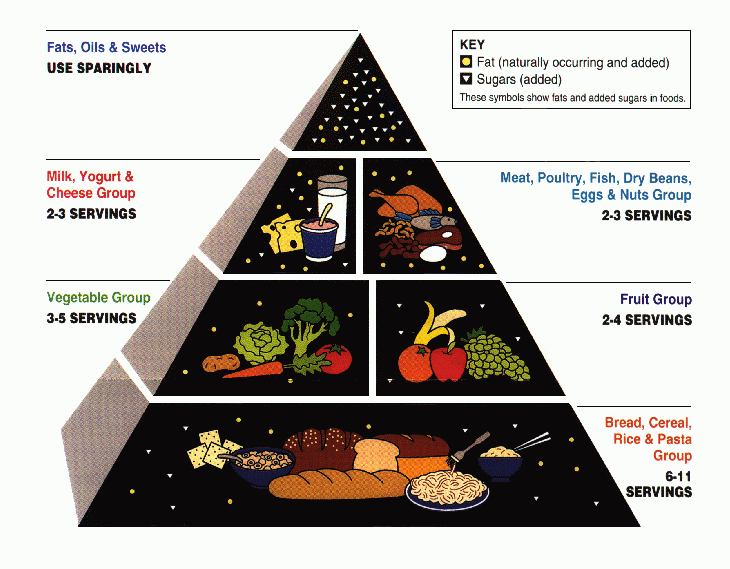

What's the common factor? WAY TOO MANY CARBS and an unbalanced diet.
If you look at the Basic 7 -- you've got essentially 40% protein, 30% carbs and 30% fat. And that pretty much appeared to work... obesity, diabetes, cancer and heart disease were all MUCH lower then than they are today. You think that's a coincidence??
Wednesday, May 4, 2011
Food Assistance Stupidity
Out of curiosity, I looked into the Alaska Food Stamp program. For the most part, everything makes sense, although I do question some of the work-related eligibility requirements as a tad over-stringent given our geography and economy; however I have some serious qualms with a couple of covered and uncovered items.
WRT subsistence hunting and fishing:
Huh?!? So what exactly are we hunting with? Bow & arrows? Spears & clubs? Harsh language? The least they could do is offer some lifetime limits on appropriate calibers of firearms and a yearly allotment of those ammunitions. Say, for each family member, one 22LR & one 30-06, with a yearly allotment of 100 rds each... that should do it for most real subsistence hunting situations in this state (you can get a moose and some grouse).
WRT purchased food & food products:
And this is why I think the government officials responsible for developing and regulating these programs are asshats and cause most of the abuses in "social welfare". I know a lot of folks think these sorts of programs should be eliminated entirely, but I just want them managed properly and logically if we're going to pay for them!
WRT subsistence hunting and fishing:
- Covered: necessary hunting and fishing equipment
- Not Covered: firearms and ammunition
Huh?!? So what exactly are we hunting with? Bow & arrows? Spears & clubs? Harsh language? The least they could do is offer some lifetime limits on appropriate calibers of firearms and a yearly allotment of those ammunitions. Say, for each family member, one 22LR & one 30-06, with a yearly allotment of 100 rds each... that should do it for most real subsistence hunting situations in this state (you can get a moose and some grouse).
WRT purchased food & food products:
- Covered: Snack foods like candy, potato chips, chewing gum, and soft drinks. Vegetable seeds and food producing plants, roots, and trees.
- Not Covered: Items for food preservation, such as pressure cookers, canning jars and lids, paraffin, freezer containers and wrapping paper.
And this is why I think the government officials responsible for developing and regulating these programs are asshats and cause most of the abuses in "social welfare". I know a lot of folks think these sorts of programs should be eliminated entirely, but I just want them managed properly and logically if we're going to pay for them!
Thursday, April 14, 2011
I Propose a New Law
I'm doing my spring cleaning, and have just about had it with my pantry.
I definitely think it should be illegal to sell a product in a can that will not stack on itself!
Really, some of these manufacturers must think we have all the cabinet and shelf space in the world, and we can afford to line up their product in single-tier rows simply because they want to save a few cents not purchasing nesting cans. And the horrible thing about it is that the worst offenders seem to be folks whole sell cases/packs at the warehouse stores. They sell the exact same product in nesting cans individually at the supermarket; but somehow when they sell 8 or 12 or 24 of them at once, they can't be bothered?!?!
Oh sure, you could just leave them in the box/case/flat... but how not useful is that unless they're full? Once you open the case, you just start losing space again. Assuming, of course, that the dimensions of their case actually fit in your space, or that their packaging is even vaguely easy to get into. Totally sucks if the only way to make it fit is to put it in so their "convenient" roll-out tabby thingy is either completely useless or spews cans all over the place the minute a mouse so much as farts in its general location. Of course, most of them don't even come with the semi-useful tabby feeder slots... you have to yank the whole box out and open it... and usually after sledgehammering the glue off the "lid", all the other joints to spontaneously erupt. And those shallow cardboard flats simply fold up and fall apart the minute you take the annoying plastic shrink-wrap off them. GRRRRRRRR
Yes, you can cut up cardboard to make little support trays between the tiers. Yes, you can get fancier and make/buy extra shelve. Or purchase one of those nifty wire/plastic "organizers" that never seem to fit the space either, don't seem to fit the products either, and experience an abnormally high failure rate. You could go ultra and buy/build self-feeding, top-loading, "professional" food storage and rotation systems... because, hey, we have all the money in the world, right?!
Why?!? Why should we even have to go through any of that at all? Can't these bastards have a little bit of compassion and just package in nesting cans in the first place?!? Then I'd only have to worry about making the funky shaped/sized cans fit. (Hello, Hormel, are you listening?? Your Spam and Corned Beef cans may be cute and all that, but they do NOT play well in the cupboard!)
Ban the Funky Can, Man!!
[/end rant]
I definitely think it should be illegal to sell a product in a can that will not stack on itself!
Really, some of these manufacturers must think we have all the cabinet and shelf space in the world, and we can afford to line up their product in single-tier rows simply because they want to save a few cents not purchasing nesting cans. And the horrible thing about it is that the worst offenders seem to be folks whole sell cases/packs at the warehouse stores. They sell the exact same product in nesting cans individually at the supermarket; but somehow when they sell 8 or 12 or 24 of them at once, they can't be bothered?!?!
Oh sure, you could just leave them in the box/case/flat... but how not useful is that unless they're full? Once you open the case, you just start losing space again. Assuming, of course, that the dimensions of their case actually fit in your space, or that their packaging is even vaguely easy to get into. Totally sucks if the only way to make it fit is to put it in so their "convenient" roll-out tabby thingy is either completely useless or spews cans all over the place the minute a mouse so much as farts in its general location. Of course, most of them don't even come with the semi-useful tabby feeder slots... you have to yank the whole box out and open it... and usually after sledgehammering the glue off the "lid", all the other joints to spontaneously erupt. And those shallow cardboard flats simply fold up and fall apart the minute you take the annoying plastic shrink-wrap off them. GRRRRRRRR
Yes, you can cut up cardboard to make little support trays between the tiers. Yes, you can get fancier and make/buy extra shelve. Or purchase one of those nifty wire/plastic "organizers" that never seem to fit the space either, don't seem to fit the products either, and experience an abnormally high failure rate. You could go ultra and buy/build self-feeding, top-loading, "professional" food storage and rotation systems... because, hey, we have all the money in the world, right?!
Why?!? Why should we even have to go through any of that at all? Can't these bastards have a little bit of compassion and just package in nesting cans in the first place?!? Then I'd only have to worry about making the funky shaped/sized cans fit. (Hello, Hormel, are you listening?? Your Spam and Corned Beef cans may be cute and all that, but they do NOT play well in the cupboard!)
Ban the Funky Can, Man!!
[/end rant]
Friday, April 8, 2011
Heirloom, OP, F1, GM... oh my!
Looking through seed catalogs can be an overwhelming experience. Not only are you tempted to buy every seed that looks good, way more than you'd ever eat really, and probably a few that aren't even appropriate for your conditions... but there's also a staggering amount of acronyms and abbreviations strewn about. For now, I'm going to ignore all the ones related to disease and pest resistances since those seem to change slightly between distributors. But one thing I have noticed on many of the discussion boards and forums is what type of seed to get... and there seems to be a lot of confusion around heirloom, open-pollinated (OP), hybrid (F1) and genetically modified (GM). So here's a little primer...
Heirloom: This simply means that the variety comes from a stock that has been grown for a long time without any changes in its breeding and it's not one of the common commercial varieties that have been selectively bred for high yield, uniformity, mechanical harvesting, and storage-ripening desired of supermarket produce. Planting heirlooms in your garden helps protect genetic diversity, and they usually taste better, or store better, or grow better in a specific area since people wouldn't keep planting them in their food gardens year after year if they didn't (taste and reliability of their own food being more important than profit and ease of manufacture).
Most heirloom varieties are OP which means that they pollinate themselves via insects, wind, or animals and the seeds produced will most likely (but not always!) breed true (grow a plant identical to the parent). However, (because they are OP) in order to keep an heirloom pure, you have to make sure that it's either the only variety you plant, or that the seeds you save come only from fruits/veg that you know for sure didn't get cross-pollinated by another variety... otherwise you might end up with an F1.
OP - Open-Pollinated: This simply means that the plant variety is capable of reproducing through natural pollination methods, and it's seed should grow offspring that are identical to the parent (some exceptions exist*). OP varieties are important to homesteaders and preppers because it means that they can save the seeds from their own harvests and plant them year after year without having to buy new seed and can be reasonably assured that they'll get the same food from them. However, many (but not all) F1 and GM can reproduce through natural pollination methods but they don't normally bred true in successive generations.
It's important to understand the breeding characteristics of any species you plant. Most plants require both male and female flowers or flower parts to reproduce by pollination. However, some species don't have male and female flowers on the same plant, or the male and female flowers on the same plant won't pollinate themselves, in which case you'd need another plant of the same or similar species to pollinate them (many tree fruits are known to need a "surrogate" for pollination). And other species have both male and female flowers and will freely self-pollinate, there are even some species that are hermaphroditic (contain both male and female parts in the same flower) and they can also self-pollinate (even within the same flower!).
In addition to the male/female aspect, you also have to take into consideration how readily the cross-pollinates with other varieties (or species!). Most beans tend to be strongly inbreeding... they easily self-pollinate and don't usually cross with other varieties even if they are planted nearby. Tomatoes tend to be strongly outbreeding... they are easily pollinated by other varieties of tomatoes, and are genetically capable of crossing with other members of the nightshade family (peppers, eggplants & potatoes) although this is uncommon. Important to note that the fruit of a cross-bred plant is still the same fruit you'd expect... it's the fruit of the hybrid off-spring that will be different. If you have a strongly outbreeding variety in your garden and you want to keep it pure, either don't plant any other varieties, time your plantings so they flower at different times, physically distance them so crossing isn't likely (this is hard, some will cross-pollinate within 3 miles!), cover your rows and hand-pollinate, or bag a few blossoms to hand pollinate and only save the seeds of those fruits.
* Potatoes are one notable exception to the OP rule. Potato seeds produced by the pollinated flowers (as opposed to seed potatoes which are eyes from the tubers) do not bred true. In order to get successive generations of potatoes that are identical to the parent, you need to plant eyes from the potato tubers you collected from the parent. This is actually natural cloning, not really sexual reproduction.
F1 - Hybrids: Contrary to what some people believe, hybrids are not evil Frankenfood (GM). Hybrids are the result of intentional or unintentional cross-pollination of two parents of different varieties that create offspring with a combination of and/or slightly different characteristics than the parent. Doing this intentionally is a form of selective breeding (although only saving and planting seed from plants that have the characteristics you want is also selective breeding, just not crossing). There are advantages to planting F1s in your food garden, namely a phenomenon known as "hybrid vigor". Hybrid vigor means the first generation offspring of a cross grows better/faster, has higher yields, and/or is more resistant to pest/disease than the parent. This can be really beneficial to home food gardener who has less than perfect conditions and needs to grow a lot of food, or a type that maybe wouldn't do so well in their climate (super-early harvest, slow bolting, or extra cold-hardiness). Hybrids are completely natural, even if we humans had a hand in it, because they haven't crossed with anything that nature didn't already allow.
In some cases, intentional crossing results in F1 offspring that are sterile, which is sometimes a desired trait (seedless grapes and watermelons). In most cases, however, hybrids are genetically unstable, will not breed true, and subsequent generations will either become sterile or begin reverting to the parent or continue to mutate unpredictably. Sometimes repeated breeding of an F1 to itself, or to one of the parents, eventually creates an Fn (F2 is second generation, F3 is third, etc) that is stable and breeds true... and another reliable OP variety is born! Planting that seed will now consistently grow offspring with the expected characteristics.
GM - Genetically Modified: This is the evil Frankenfood (and, yes, it's one of my soapboxes). These are genetic mutations created in a laboratory by breaking into and fiddling with the DNA directly. These organisms could never be produced in nature because they combine genetic materials from entirely different, non-compatible, families and sometimes even cross kingdoms (plant with animal, etc). That's a bit of an oversimplification, but rest assured that these modifications (mutations!) are created by separating a gene responsible for a desired trait from the donor (usually a bacteria that may have been GM'd itself to produce it), breaking the DNA chain of the target gamete and inserting that gene into the chain where they think it'll produce the same desired result in the host. One thing we know about genes is that they're often responsible for more than one trait, and where you put them sometimes makes a big difference in what you end up with... which is what makes this practice a bit scary when you really think about it. What else is controlled by that gene, and what else is affected by that placement? Do you know? Do THEY? Do they even care as long as they turn a profit? Now you see why I'm a big fan of making farmers post their fields if they're planting GM crops, divulge the animals they're raising are GM (esp. if they're breeding them out!), and all GM foods being labeled in the market!
Unfortunately, many GM plants enjoy hybrid vigor almost as much (more in some cases) as their natural F1 hybrid counterparts. This means they may outperform other OP and F1 varieties, including escaping containment (becoming a weed) and cross-pollinating those varieties for several miles around where they are planted... which is a big problem if Farmer Jane is growing organic heirlooms down the road and suddenly gets a bunch of Frankenbastards next year (and gets sued by Monsanto for copyright infringement!). In some cases, the providers of GM seed alter them to be sterile or at least have a suicide gene that kills off the plant in some amount of subsequent generations, and the majority of them do not breed true. This means you can't save the seed and plant it next year (even if Monsanto won't sue you for copyright infringement and licensing violation). However, there's really no telling whether or not the sterility and/or suicide switch will actually work as intended if that plant is actively cross-pollinating with other natural varieties in the wild because Nature is nothing if not fickle and resilient. (You all remember Jurassic Park and the frog DNA, right?) Even if the safeguards do function, we've now possibly corrupted, and effectively destroyed, the genetic purity and diversity of any crop which it cross-pollinated within several miles... and several miles of those... and several miles of those... until it's finally noticed. Mutations can be surprisingly aggressive that way. If you do decide to plant a GM in your garden, please do everyone a favor and pinch off anything that even looks like a flower bud before it opens! Or at least don't move anywhere near me!
Edited to Add: Gungnir just informed me that it seems someone in our government actually showed some rare forethought and made engineering a "suicide", or terminator, gene into a GMO illegal because of the "remote possibility" that the organism would escape containment, cross-breed with other varieties in the wild, and effectively decimate the entire population of that organism. So no terminator genes (that we know of, at least... corporations can do some pretty sneaky things to protect their profits and market advantage sometimes).
Now, I know there are all sorts of "good reasons" to GM food... resistance to herbicides (Roundup Ready), built-in pest resistance (Bt bred), and additional nutrients or quantity of nutrients (Golden Rice). All of these, on the surface at least, appear to be good, humanitarian advantages allowing farmers to produce more and more nutritious foods more easily for more people. I'm all for feeding the people... but doing a wrong thing for the right reasons... what do they say about the road to Hell and it's paving? In most cases, the things that these crops are being GM'd for are a direct result of our own arrogant adherence to unnatural and unsustainable agricultural practices. Many plant diseases, pest and weed pressures can be addressed through natural F1 hybrids and instituting healthier management practices like crop rotation and fallow fielding with green manure groups, and crop diversity rather than mono-cropping. And let's not forget that a lot of the countries that these "humanitarian" GM crops are supposed to help feed don't even want it because it's GM and current trials aren't going as well as promised!
So, to wrap up:
Heirloom: This simply means that the variety comes from a stock that has been grown for a long time without any changes in its breeding and it's not one of the common commercial varieties that have been selectively bred for high yield, uniformity, mechanical harvesting, and storage-ripening desired of supermarket produce. Planting heirlooms in your garden helps protect genetic diversity, and they usually taste better, or store better, or grow better in a specific area since people wouldn't keep planting them in their food gardens year after year if they didn't (taste and reliability of their own food being more important than profit and ease of manufacture).
Most heirloom varieties are OP which means that they pollinate themselves via insects, wind, or animals and the seeds produced will most likely (but not always!) breed true (grow a plant identical to the parent). However, (because they are OP) in order to keep an heirloom pure, you have to make sure that it's either the only variety you plant, or that the seeds you save come only from fruits/veg that you know for sure didn't get cross-pollinated by another variety... otherwise you might end up with an F1.
OP - Open-Pollinated: This simply means that the plant variety is capable of reproducing through natural pollination methods, and it's seed should grow offspring that are identical to the parent (some exceptions exist*). OP varieties are important to homesteaders and preppers because it means that they can save the seeds from their own harvests and plant them year after year without having to buy new seed and can be reasonably assured that they'll get the same food from them. However, many (but not all) F1 and GM can reproduce through natural pollination methods but they don't normally bred true in successive generations.
It's important to understand the breeding characteristics of any species you plant. Most plants require both male and female flowers or flower parts to reproduce by pollination. However, some species don't have male and female flowers on the same plant, or the male and female flowers on the same plant won't pollinate themselves, in which case you'd need another plant of the same or similar species to pollinate them (many tree fruits are known to need a "surrogate" for pollination). And other species have both male and female flowers and will freely self-pollinate, there are even some species that are hermaphroditic (contain both male and female parts in the same flower) and they can also self-pollinate (even within the same flower!).
In addition to the male/female aspect, you also have to take into consideration how readily the cross-pollinates with other varieties (or species!). Most beans tend to be strongly inbreeding... they easily self-pollinate and don't usually cross with other varieties even if they are planted nearby. Tomatoes tend to be strongly outbreeding... they are easily pollinated by other varieties of tomatoes, and are genetically capable of crossing with other members of the nightshade family (peppers, eggplants & potatoes) although this is uncommon. Important to note that the fruit of a cross-bred plant is still the same fruit you'd expect... it's the fruit of the hybrid off-spring that will be different. If you have a strongly outbreeding variety in your garden and you want to keep it pure, either don't plant any other varieties, time your plantings so they flower at different times, physically distance them so crossing isn't likely (this is hard, some will cross-pollinate within 3 miles!), cover your rows and hand-pollinate, or bag a few blossoms to hand pollinate and only save the seeds of those fruits.
* Potatoes are one notable exception to the OP rule. Potato seeds produced by the pollinated flowers (as opposed to seed potatoes which are eyes from the tubers) do not bred true. In order to get successive generations of potatoes that are identical to the parent, you need to plant eyes from the potato tubers you collected from the parent. This is actually natural cloning, not really sexual reproduction.
F1 - Hybrids: Contrary to what some people believe, hybrids are not evil Frankenfood (GM). Hybrids are the result of intentional or unintentional cross-pollination of two parents of different varieties that create offspring with a combination of and/or slightly different characteristics than the parent. Doing this intentionally is a form of selective breeding (although only saving and planting seed from plants that have the characteristics you want is also selective breeding, just not crossing). There are advantages to planting F1s in your food garden, namely a phenomenon known as "hybrid vigor". Hybrid vigor means the first generation offspring of a cross grows better/faster, has higher yields, and/or is more resistant to pest/disease than the parent. This can be really beneficial to home food gardener who has less than perfect conditions and needs to grow a lot of food, or a type that maybe wouldn't do so well in their climate (super-early harvest, slow bolting, or extra cold-hardiness). Hybrids are completely natural, even if we humans had a hand in it, because they haven't crossed with anything that nature didn't already allow.
In some cases, intentional crossing results in F1 offspring that are sterile, which is sometimes a desired trait (seedless grapes and watermelons). In most cases, however, hybrids are genetically unstable, will not breed true, and subsequent generations will either become sterile or begin reverting to the parent or continue to mutate unpredictably. Sometimes repeated breeding of an F1 to itself, or to one of the parents, eventually creates an Fn (F2 is second generation, F3 is third, etc) that is stable and breeds true... and another reliable OP variety is born! Planting that seed will now consistently grow offspring with the expected characteristics.
GM - Genetically Modified: This is the evil Frankenfood (and, yes, it's one of my soapboxes). These are genetic mutations created in a laboratory by breaking into and fiddling with the DNA directly. These organisms could never be produced in nature because they combine genetic materials from entirely different, non-compatible, families and sometimes even cross kingdoms (plant with animal, etc). That's a bit of an oversimplification, but rest assured that these modifications (mutations!) are created by separating a gene responsible for a desired trait from the donor (usually a bacteria that may have been GM'd itself to produce it), breaking the DNA chain of the target gamete and inserting that gene into the chain where they think it'll produce the same desired result in the host. One thing we know about genes is that they're often responsible for more than one trait, and where you put them sometimes makes a big difference in what you end up with... which is what makes this practice a bit scary when you really think about it. What else is controlled by that gene, and what else is affected by that placement? Do you know? Do THEY? Do they even care as long as they turn a profit? Now you see why I'm a big fan of making farmers post their fields if they're planting GM crops, divulge the animals they're raising are GM (esp. if they're breeding them out!), and all GM foods being labeled in the market!
Unfortunately, many GM plants enjoy hybrid vigor almost as much (more in some cases) as their natural F1 hybrid counterparts. This means they may outperform other OP and F1 varieties, including escaping containment (becoming a weed) and cross-pollinating those varieties for several miles around where they are planted... which is a big problem if Farmer Jane is growing organic heirlooms down the road and suddenly gets a bunch of Frankenbastards next year (and gets sued by Monsanto for copyright infringement!). In some cases, the providers of GM seed alter them to be sterile or at least have a suicide gene that kills off the plant in some amount of subsequent generations, and the majority of them do not breed true. This means you can't save the seed and plant it next year (even if Monsanto won't sue you for copyright infringement and licensing violation). However, there's really no telling whether or not the sterility and/or suicide switch will actually work as intended if that plant is actively cross-pollinating with other natural varieties in the wild because Nature is nothing if not fickle and resilient. (You all remember Jurassic Park and the frog DNA, right?) Even if the safeguards do function, we've now possibly corrupted, and effectively destroyed, the genetic purity and diversity of any crop which it cross-pollinated within several miles... and several miles of those... and several miles of those... until it's finally noticed. Mutations can be surprisingly aggressive that way. If you do decide to plant a GM in your garden, please do everyone a favor and pinch off anything that even looks like a flower bud before it opens! Or at least don't move anywhere near me!
Edited to Add: Gungnir just informed me that it seems someone in our government actually showed some rare forethought and made engineering a "suicide", or terminator, gene into a GMO illegal because of the "remote possibility" that the organism would escape containment, cross-breed with other varieties in the wild, and effectively decimate the entire population of that organism. So no terminator genes (that we know of, at least... corporations can do some pretty sneaky things to protect their profits and market advantage sometimes).
Now, I know there are all sorts of "good reasons" to GM food... resistance to herbicides (Roundup Ready), built-in pest resistance (Bt bred), and additional nutrients or quantity of nutrients (Golden Rice). All of these, on the surface at least, appear to be good, humanitarian advantages allowing farmers to produce more and more nutritious foods more easily for more people. I'm all for feeding the people... but doing a wrong thing for the right reasons... what do they say about the road to Hell and it's paving? In most cases, the things that these crops are being GM'd for are a direct result of our own arrogant adherence to unnatural and unsustainable agricultural practices. Many plant diseases, pest and weed pressures can be addressed through natural F1 hybrids and instituting healthier management practices like crop rotation and fallow fielding with green manure groups, and crop diversity rather than mono-cropping. And let's not forget that a lot of the countries that these "humanitarian" GM crops are supposed to help feed don't even want it because it's GM and current trials aren't going as well as promised!
So, to wrap up:
- Get heirlooms if you like them, but be considerate and try to maintain their genetic purity for the sake of diversity. Before spending the extra money, make sure that it will actually grow well in your conditions and produce the yields and flavors you're looking for... just because it's heirloom doesn't automatically mean it's better.
- Get OP if you want to save seeds and plant again next year to get the same crop. Doesn't matter if it's heirloom or one of the newer varieties as long as it grows well in your conditions and gives you a harvest that meets your needs and expectations in both yield and flavor.
- Get F1 if you have difficult conditions to contend with and you don't intend to save the seed to plant next year, just be careful that it doesn't cross with your other OP's & heirlooms. If you feel adventurous, you can even carefully attempt crossing some of your own varieties to get the hybrid benefits.
- Avoid GM if at all possible... like if it's the only viable seed left to plant on the entire planet and there are absolutely no other sources of food available.
Saturday, March 26, 2011
Lessons from the Larder
As we approach our second anniversary living out here in the middle of nowhere, without refrigeration and easy access to supermarkets, I thought I'd pass on a few things we've learned about our food storage planning.
Dehydrated food saves a lot of space and weight -- BUT -- it takes a lot of time and water to rehydrate. The beans and veggies are the worst*, so you really do have to plan ahead much further than you'd expect to make them even vaguely chewable. If you don't get them rehydrated and cooked down enough they will seriously mess up your guts! Dried grains and fruit are much less of a problem. Dried meat, unless it's jerky or meant to be eaten in its "dry" state (like salami), is also a bit of a problem and never really gets the right texture back... this can really upset your tummy.
* However, dried beans and veggies are AWESOME if you grind them down into powder/flour to add to recipes. They rehydrate almost instantly and add a lot of flavor and extra nutrients to just about any dish.
My tummy does NOT like canned meat chunks AT ALL. Maybe it's the double (or triple) cooking that's the problem, but the only way I can seem to tolerate canned meats is if its been ground down to a paste (like the Underwood sandwich spreads) or I mix in a whole lot of mayo to make it a cold salad (chicken & tuna). So, it looks like we're going to have to adjust our pantry inventory to have most of the meat frozen except for canned meals that contain meat (like chili, soups & stew) or spreads.
Canned beans are gazillion times easier to cook with than dried beans, and they don't bother my tummy as much. So I think what I'll have to do is pre-cook and can a bunch plain/seasoned beans & bean dishes (chili, baked beans, refried beans, pea soup) from the dried bean stores every few months and keep those in the pantry ready-to-eat. I think we'll eat more beans, and suffer less, that way while still keeping the long shelf life and making the most of our space. Sure, we're essentially storing water... but we have to do that anyway, better it's in the food making it edible than just sitting in a jug where it will take hours and hours to make that food edible were it dehydrated.
Some stuff keeps so long in it's natural state, that keeping large canned or dried stores is nearly pointless. Potatoes*, onions, garlic and cabbage come to the top of the list. I'm going to drastically reduce the amount of those things that I can or dehydrate, maybe only 3 months worth instead of a year, and invest in some good storage bins for properly keeping the whole food usable instead. Even if we don't get the garden in, a bulk bag of potatoes or onions can easily keep for 3-6 months between grocery trips.
*However, dried potatoes do have their uses! First & foremost... if you blanch, then dehydrate your potatoes and grind them into a flour/meat you have your own instant mashed potatoes, can add them to breads as a flour, and use them in soups & stews as a thickener. Also, if you slice and boil your taters until they are al dente (mostly cooked, but still a little crispy), then dehydrate them, you can make your own Better Crocker-style "box meals". Make a pre-measured sauce mix from your dry ingredients (powdered milk, cheese powder, sour cream powder), put that into an envelope or baggy, scoop some dried potato slices into a quart jar or vac-bag, put the sauce mix and preparation instructions in, and then dry-can/vac it... voila! Potatoes au gratin in a few minutes, not thought required, just add water! Bake a thin layer of "instant" mashed potatoes on a cookie sheet and you have passable Pringles, or bake/flash fry your dried and seasoned potato slices and you have really crispy chips without a lot of grease (works with other veggies too!). And, of course, dried onion & garlic can always be ground down into a powder to use as a seasoning rather than a veg.
We go through WAY more sugar and butter than any of the calculators tell you to stock up. No, we're not eating butter and sugar sandwiches or baking lots of cookies and candies. Our climate and activity level require about twice as many calories than your typical RDA and one of the easiest ways to add calories is with sugar and fat (we eat a lot more cheese than "recommended" too). Our sugar consumption is mostly in beverages since it's easy to slam down a couple hundred instant calories in a liquid... coffee, tea and hot chocolate are all made with a healthy dose of sugar and cream/milk, and then there's powdered drink mixes (like Tang, Kool-Aid, lemonade and Gatorade) since we don't always have access to fruit juices fresh or in concentrate (have to learn to make & can them eventually). Did you know that you can make pretty decent sno-cones with real snow and a syrup made from drink mix? YUP, it's tasty! But anyway, we had to adjust our inventory to include double or triple the amount of sugar, honey, butter, milk and cheese... while, oddly, we barely have much of the dessert/treat things like cake, frosting, pudding, gelatin, cookies & candy.
Portions become really important when you can't refrigerate your leftovers. Most canned goods come in 12-16 oz cans; which is just about right for two people in one meal... if that's the only thing we're eating. But, if you're making a recipe that calls for several ingredients (like stew), or you feel like having peas and corn, you're going to end up with way more food than two people can eat in a sitting, and probably end up with more than you want to end up eating for the next several meals until you finally finish it (or it spoils and the dog gets it). So you either need space in the freezer or plan to can the remainder. G can eat a pint/can of soup or chili or hash all by himself, I normally can only eat about a cup.... so a pint is too little and a quart is too much. All this gets to be factored in when I start cooking and canning my own stuff instead of relying on commercial canned goods. A quart of ready-meal is probably a good size, since I'm likely to come back in an hour or so to finish off that last cup (I don't have as much problem eating the same thing more than once in a day/row). We'll need to can pints of veggies we like to eat by themselves, but we're also either going to have to can 1/2 pints of them, or can up medleys in pints, so we can use them in cooking better... or I have to figure out how to sneak in that other half jar of peas into the next meal in a completely new and interesting way LOL.
In the summer, we can store all the canned foods we want in the shed since it doesn't get hot... this is awesome for canning up the garden harvest. In the winter, we can store all the frozen food we want in the shed since it never gets above zero. The problem comes in during the transition months on either end, and making sure that we have enough room in the pantry (and eventual root cellar) for all the canned goods during winter and all the frozen foods in the tiny DC freezer during the summer (or cook and can like a mad fiend before it gets warm and everything thaws!). It's a careful balancing act... but at least it means we keep our food rotated since we basically shift our entire stock twice a year!
So there are a few things we've noticed while tracking our food inventory, and hopefully it'll give you all a few things to think about with your own food storage plans. All the calculators and recommendations are just starting points, you really have to keep your own inventories and records so you understand exactly what and how your family eats, so that you can tailor an inventory and plan that works perfectly for you. While you're mulling that over, I'm going to go find out where I can safely stash 500 lbs of sugar :D
Oh yeah - forgot to mention... if you don't like something, or you don't eat a lot of something, or you have an allergy or intolerance to something, or you don't have a recipe to hide something you don't like... DON'T STORE OR PLANT IT, no matter what the recommendations are! We don't have nearly the recommended amounts of peanut products (G - allergy), or whole egg powders (G uses more powdered yolk because of white protein allergy, and I use more powdered white because of yolk sulfur intolerance), or wheat & wheat flours (I have a mild/moderate gluten intolerance so we use other grains for at least half), or soy products (G - allergy, and we both have to avoid texturized soy protein like the plague!), or chocolate products (G - allergy), and neither of us can eat mangoes or eggplant, nor do we particularly care for some of the fruits/veg/grains that are always highly recommended in most survival pantry and garden lists. If you can't or aren't going to eat it, don't waste your time, money and space on it!
Dehydrated food saves a lot of space and weight -- BUT -- it takes a lot of time and water to rehydrate. The beans and veggies are the worst*, so you really do have to plan ahead much further than you'd expect to make them even vaguely chewable. If you don't get them rehydrated and cooked down enough they will seriously mess up your guts! Dried grains and fruit are much less of a problem. Dried meat, unless it's jerky or meant to be eaten in its "dry" state (like salami), is also a bit of a problem and never really gets the right texture back... this can really upset your tummy.
* However, dried beans and veggies are AWESOME if you grind them down into powder/flour to add to recipes. They rehydrate almost instantly and add a lot of flavor and extra nutrients to just about any dish.
My tummy does NOT like canned meat chunks AT ALL. Maybe it's the double (or triple) cooking that's the problem, but the only way I can seem to tolerate canned meats is if its been ground down to a paste (like the Underwood sandwich spreads) or I mix in a whole lot of mayo to make it a cold salad (chicken & tuna). So, it looks like we're going to have to adjust our pantry inventory to have most of the meat frozen except for canned meals that contain meat (like chili, soups & stew) or spreads.
Canned beans are gazillion times easier to cook with than dried beans, and they don't bother my tummy as much. So I think what I'll have to do is pre-cook and can a bunch plain/seasoned beans & bean dishes (chili, baked beans, refried beans, pea soup) from the dried bean stores every few months and keep those in the pantry ready-to-eat. I think we'll eat more beans, and suffer less, that way while still keeping the long shelf life and making the most of our space. Sure, we're essentially storing water... but we have to do that anyway, better it's in the food making it edible than just sitting in a jug where it will take hours and hours to make that food edible were it dehydrated.
Some stuff keeps so long in it's natural state, that keeping large canned or dried stores is nearly pointless. Potatoes*, onions, garlic and cabbage come to the top of the list. I'm going to drastically reduce the amount of those things that I can or dehydrate, maybe only 3 months worth instead of a year, and invest in some good storage bins for properly keeping the whole food usable instead. Even if we don't get the garden in, a bulk bag of potatoes or onions can easily keep for 3-6 months between grocery trips.
*However, dried potatoes do have their uses! First & foremost... if you blanch, then dehydrate your potatoes and grind them into a flour/meat you have your own instant mashed potatoes, can add them to breads as a flour, and use them in soups & stews as a thickener. Also, if you slice and boil your taters until they are al dente (mostly cooked, but still a little crispy), then dehydrate them, you can make your own Better Crocker-style "box meals". Make a pre-measured sauce mix from your dry ingredients (powdered milk, cheese powder, sour cream powder), put that into an envelope or baggy, scoop some dried potato slices into a quart jar or vac-bag, put the sauce mix and preparation instructions in, and then dry-can/vac it... voila! Potatoes au gratin in a few minutes, not thought required, just add water! Bake a thin layer of "instant" mashed potatoes on a cookie sheet and you have passable Pringles, or bake/flash fry your dried and seasoned potato slices and you have really crispy chips without a lot of grease (works with other veggies too!). And, of course, dried onion & garlic can always be ground down into a powder to use as a seasoning rather than a veg.
We go through WAY more sugar and butter than any of the calculators tell you to stock up. No, we're not eating butter and sugar sandwiches or baking lots of cookies and candies. Our climate and activity level require about twice as many calories than your typical RDA and one of the easiest ways to add calories is with sugar and fat (we eat a lot more cheese than "recommended" too). Our sugar consumption is mostly in beverages since it's easy to slam down a couple hundred instant calories in a liquid... coffee, tea and hot chocolate are all made with a healthy dose of sugar and cream/milk, and then there's powdered drink mixes (like Tang, Kool-Aid, lemonade and Gatorade) since we don't always have access to fruit juices fresh or in concentrate (have to learn to make & can them eventually). Did you know that you can make pretty decent sno-cones with real snow and a syrup made from drink mix? YUP, it's tasty! But anyway, we had to adjust our inventory to include double or triple the amount of sugar, honey, butter, milk and cheese... while, oddly, we barely have much of the dessert/treat things like cake, frosting, pudding, gelatin, cookies & candy.
Portions become really important when you can't refrigerate your leftovers. Most canned goods come in 12-16 oz cans; which is just about right for two people in one meal... if that's the only thing we're eating. But, if you're making a recipe that calls for several ingredients (like stew), or you feel like having peas and corn, you're going to end up with way more food than two people can eat in a sitting, and probably end up with more than you want to end up eating for the next several meals until you finally finish it (or it spoils and the dog gets it). So you either need space in the freezer or plan to can the remainder. G can eat a pint/can of soup or chili or hash all by himself, I normally can only eat about a cup.... so a pint is too little and a quart is too much. All this gets to be factored in when I start cooking and canning my own stuff instead of relying on commercial canned goods. A quart of ready-meal is probably a good size, since I'm likely to come back in an hour or so to finish off that last cup (I don't have as much problem eating the same thing more than once in a day/row). We'll need to can pints of veggies we like to eat by themselves, but we're also either going to have to can 1/2 pints of them, or can up medleys in pints, so we can use them in cooking better... or I have to figure out how to sneak in that other half jar of peas into the next meal in a completely new and interesting way LOL.
In the summer, we can store all the canned foods we want in the shed since it doesn't get hot... this is awesome for canning up the garden harvest. In the winter, we can store all the frozen food we want in the shed since it never gets above zero. The problem comes in during the transition months on either end, and making sure that we have enough room in the pantry (and eventual root cellar) for all the canned goods during winter and all the frozen foods in the tiny DC freezer during the summer (or cook and can like a mad fiend before it gets warm and everything thaws!). It's a careful balancing act... but at least it means we keep our food rotated since we basically shift our entire stock twice a year!
So there are a few things we've noticed while tracking our food inventory, and hopefully it'll give you all a few things to think about with your own food storage plans. All the calculators and recommendations are just starting points, you really have to keep your own inventories and records so you understand exactly what and how your family eats, so that you can tailor an inventory and plan that works perfectly for you. While you're mulling that over, I'm going to go find out where I can safely stash 500 lbs of sugar :D
Oh yeah - forgot to mention... if you don't like something, or you don't eat a lot of something, or you have an allergy or intolerance to something, or you don't have a recipe to hide something you don't like... DON'T STORE OR PLANT IT, no matter what the recommendations are! We don't have nearly the recommended amounts of peanut products (G - allergy), or whole egg powders (G uses more powdered yolk because of white protein allergy, and I use more powdered white because of yolk sulfur intolerance), or wheat & wheat flours (I have a mild/moderate gluten intolerance so we use other grains for at least half), or soy products (G - allergy, and we both have to avoid texturized soy protein like the plague!), or chocolate products (G - allergy), and neither of us can eat mangoes or eggplant, nor do we particularly care for some of the fruits/veg/grains that are always highly recommended in most survival pantry and garden lists. If you can't or aren't going to eat it, don't waste your time, money and space on it!
Friday, March 25, 2011
Bread Economics (White Bread)
Bread. It truly is the food of life, having fed the masses throughout recorded history. Hell, bread is so important to us that shortages have caused revolutions and downfalls of governments.
As part of my food planning, I started researching what it takes to make our daily loaf (ok, closer to weekly loaf since it's only the two of us, but you get the picture).
Here's what I found out, using average pricing per loaf at bulk stores and discount clubs (in Alaska):
So, to further understand this, I took this Traditional White Bread 2-loaf recipe:
That's right folks - you can eat fresh-baked bread all year, for a little less than 2/3 the price of the crappiest discount supermarket loaves. You could save even more if you bought more of the ingredient in larger bulk sizes!
As part of my food planning, I started researching what it takes to make our daily loaf (ok, closer to weekly loaf since it's only the two of us, but you get the picture).
Here's what I found out, using average pricing per loaf at bulk stores and discount clubs (in Alaska):
- Crappiest white/wheat loaf that is mostly fluff, not nutrition = $0.99
- Medium quality white/wheat that is pretty decent nutrition = $2.50
- High quality artisan bread = $5.00
So, to further understand this, I took this Traditional White Bread 2-loaf recipe:
- 6 1/2 cups bread flour (rounded to 7 cups for adjustment and flouring surfaces)
- 2 (.25 ounce) packages active dry yeast
- 3 tablespoons white sugar
- 1 tablespoon salt
- 3 tablespoons lard/shortening, softened
- 2 1/2 cups warm water (110 degrees F/45 degrees C)
- 1 lb flour = 3.5 cups
- 1 lb dry active yeast = 144 teaspoons = 64 "packets"
- 1 lb sugar = 2 cups = 32 tablespoons
- 1 lb salt = 2 cups = 32 tablespoons
- 1 lb lard/shortening = 2 cups = 32 tablespoons
- 100 lb flour = $40 ($20/50 lb)
- 1.5 lb dry active yeast = $9 ($6/lb)
- 5 lb sugar = $3.50 ($7/10 lb)
- 3 lb salt = $0.94 ($1.25/4 lb)
- 5 lb lard/shortening = $8 (shortening $9/6 lb)
That's right folks - you can eat fresh-baked bread all year, for a little less than 2/3 the price of the crappiest discount supermarket loaves. You could save even more if you bought more of the ingredient in larger bulk sizes!
Saturday, September 11, 2010
Mystery Meals
This is becoming quite the habit here in our household... we get some random bit of fresh food and have to piece together a meal from whatever is handy in our stored foods. It's not like we can just pop over to the
store and pick up one or two things that would make a certain recipe... you have to improvise.
Yesterday was a huge slab of salmon that one of our neighbors gave us. We snacked a bit on the thickest part shashimi-style with a little soy sauce and wasabi, but the main portion G pan-seared with some garlic, dill and ginger and then lightly poached. Served on top of a psuedo rice pilaf thrown together with brown rice boiled with some rehydrated bell pepper, onion and carrots. Absolutely delicious!
Today we got a huge cabbage. Actually, half of a huge cabbage that our other neigbors split with us. Really, what else can you do with a cabbage that is twice the size of your head?! So I'm digging around trying to think what the heck I can make with all this cabbage considering that we haven't been to the store in a while. Well, we do have a few cans of corned beef, but corned beef and cabbage is better with a brisket. We have a bunch of potatoes, I could make colcannon, if only we had more onions (those dehydrated onions never really get soft enough to mash properly!). Hmmm, what to make, what to make?? G said he had a hankering for chinese...boy, that did not really narrow it down much :) So I ended up making a sort of sweet-n-sour pork and cabbage with some canned pork chunks, soy sauce, apple cider vinegar (we're out of rice vinegar), a sprinkling of sugar, the last of our fresh garlic, a few pinches of red pepper flakes, a squirt of wasabi paste, and a few dashes of curry and ginger powder.
Not too shabby for a storage pantry meal at the last minute! It might not be served in a 5-star restaurant, but I think even Gordon Ramsey would appreciate it as Alaska Bush haute cuisine... or at least not gag and spit it out on the floor while swearing at me for being a complete gibbon! LOL
store and pick up one or two things that would make a certain recipe... you have to improvise.
Yesterday was a huge slab of salmon that one of our neighbors gave us. We snacked a bit on the thickest part shashimi-style with a little soy sauce and wasabi, but the main portion G pan-seared with some garlic, dill and ginger and then lightly poached. Served on top of a psuedo rice pilaf thrown together with brown rice boiled with some rehydrated bell pepper, onion and carrots. Absolutely delicious!
Today we got a huge cabbage. Actually, half of a huge cabbage that our other neigbors split with us. Really, what else can you do with a cabbage that is twice the size of your head?! So I'm digging around trying to think what the heck I can make with all this cabbage considering that we haven't been to the store in a while. Well, we do have a few cans of corned beef, but corned beef and cabbage is better with a brisket. We have a bunch of potatoes, I could make colcannon, if only we had more onions (those dehydrated onions never really get soft enough to mash properly!). Hmmm, what to make, what to make?? G said he had a hankering for chinese...boy, that did not really narrow it down much :) So I ended up making a sort of sweet-n-sour pork and cabbage with some canned pork chunks, soy sauce, apple cider vinegar (we're out of rice vinegar), a sprinkling of sugar, the last of our fresh garlic, a few pinches of red pepper flakes, a squirt of wasabi paste, and a few dashes of curry and ginger powder.
Not too shabby for a storage pantry meal at the last minute! It might not be served in a 5-star restaurant, but I think even Gordon Ramsey would appreciate it as Alaska Bush haute cuisine... or at least not gag and spit it out on the floor while swearing at me for being a complete gibbon! LOL
Monday, June 21, 2010
Happy Summer Solstice
So, officially today is the first day of summer. At least we have some sun. It stopped raining around 7am and has just been misting off and on. The yard seems to be draining pretty well right now, so we're hoping it clears up just a little more with the sun and the wind so we can go out to the highway and rescue the remains of the first load of lumber... although the dark clouds on the horizon look a bit ominous and wind usually means we have a strom brewing. But we really do have to get the lumber off the road, this is just getting ridiculous now.
Speaking of ridiculous, let's talk about some things I've been craving lately...
Speaking of ridiculous, let's talk about some things I've been craving lately...
- Fresh fried eggs -- mmmmm fried egg sandwiches with cheese that actually melts, on a toasted english muffin, with a thin slice of tomato and sliced mushrooms
- Salad -- any kind really... I might even sell my soul for just a leaf of crappy iceberg lettuce at this point. We have miner's lettuce wild here, but it's just not the same as a crisp romaine or mesclun tossed in a light vinegrette with feta and proscuitto with cracked pepper and cherry tomatoes
- Bruschetta -- lordy lordy but I've had a hankering for the wonderfully toasted crostinis with fresh tomato, garlic and basil "salsa"
- Caprese -- nothing says loving like fresh tomato, basil and mozzarella... as a salad or as canape
- Stilton and fresh figs -- ok, you really should eat these while drinking Port, but since I find Port to be relatively vile an I don't drink much these days anyway, just the cheese and figs would be perfect :)
- "Gourmet" cheese -- cheese is a gift from the gods, but you don't get a lot of variety up here in Alaska. I miss having a true deli cheese case that's as big as most produce sections. Stilton (as noted), Double Gloucester, Roquefort, Chevre, Camembert... oh, the list of yummy cheese is endless! Paired with the equally enless assortment of olives... **drool**
- Spring Rolls -- fresh Vietnamese or Thai style, and the more typical fried types of other Asian origins
- Sushi and Shashimi -- about the only raw fish I can get around here is salmon (wish is wonderful raw), but there are so many other lovely fish that I miss dearly (raw at least). I would probably die of pure bliss sinking my teeth into red tuna with wasabi, or spicy roe, or shrimp, or anything but eel really.
- Cucumber and Avocado canapes with caramelized shallots and capers
Subscribe to:
Posts (Atom)